Torn between Homecrest and Midwood for your next move? You are not alone. Both offer residential streets, solid transit, and a range of price points, but the feel and housing mix can be very different from block to block. In this guide, you will get clear comparisons on housing types, current price ranges, commute options, schools, and lifestyle so you can decide with confidence. Let’s dive in.
Quick neighborhood snapshot
Where they sit in Brooklyn
Homecrest is a compact residential pocket in southern Brooklyn, often considered part of the broader Sheepshead Bay area. It sits roughly between Kings Highway to the north, Avenue U or Avenue X to the south, Coney Island Avenue to the west, and Ocean Avenue to the east. For context and background, see the overview on Homecrest’s Wikipedia page and the Brooklyn Community Board 15 map of local neighborhoods (CB15 neighborhoods).
Midwood lies just to the north and west of Homecrest and covers a larger area in south-central Brooklyn. It is commonly associated with Brooklyn Community District 14 and includes several distinct pockets, including the architecturally notable Fiske Terrace–Midwood Park enclave. Learn more on the Midwood Wikipedia page.
Practical note: Neighborhood boundaries in Brooklyn can be fuzzy, and different sites draw lines differently. If a specific address matters, double-check how it is mapped on community resources or with your agent.
Housing you will see
Homecrest homes and buildings
You will find a broad mix. Along Ocean and Nostrand Avenues, mid-rise brick apartment and co-op buildings are common. On side streets, you will see attached rowhouses, two-family properties, and pockets of detached homes. Since the 2000s, newer condo infill has appeared along key corridors, which adds more 1–3 bedroom elevator-condo options to the mix.
Midwood homes and buildings
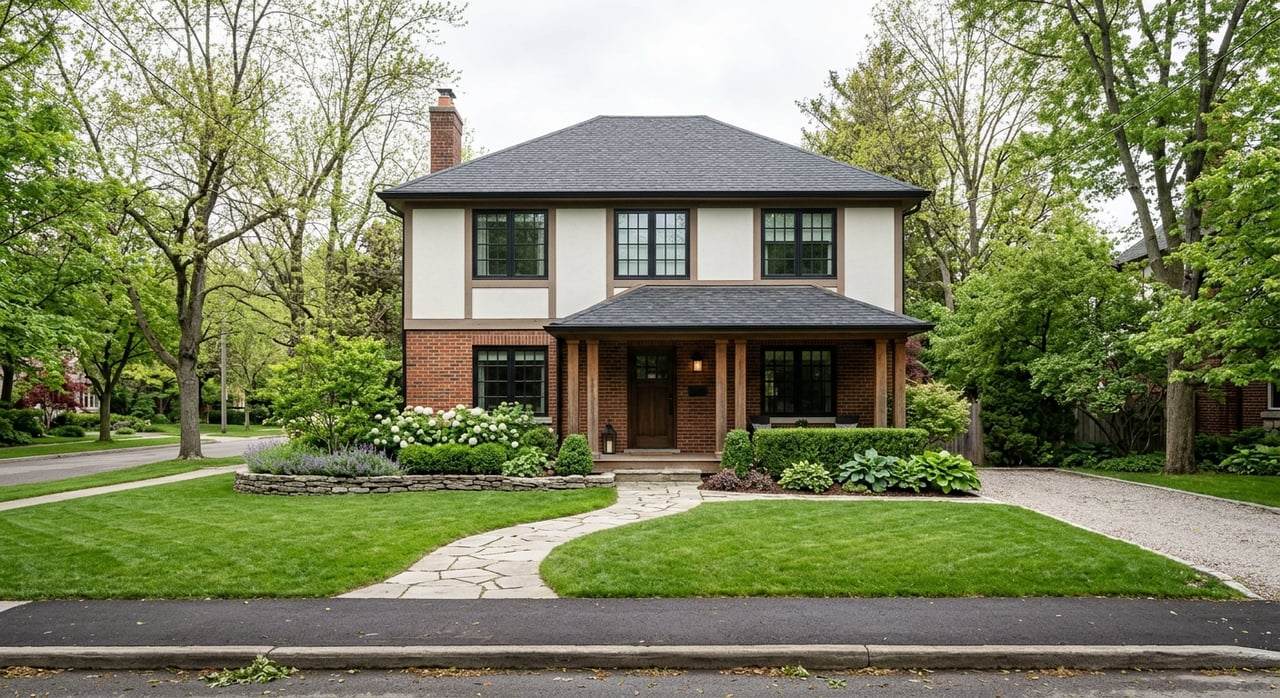
Midwood has more large detached single-family homes, including Victorian, Tudor, and Colonial Revival styles in sections like Fiske Terrace–Midwood Park. The area also includes substantial prewar co-op buildings and rows of brick houses, plus some newer condo infill. The Fiske Terrace–Midwood Park pocket is a designated historic district known for architecturally distinctive single-family houses, which can command premiums. Explore the district’s background via the Fiske Terrace–Midwood Park historic district.
Prices and what drives them
Market data cited as of Jan 2026. Medians vary by source because vendors define boundaries differently and because the mix of houses, condos, and co-ops changes month to month.
- Homecrest snapshot:
- Recent medians often land around 662,000 to 690,000 dollars based on month-to-month sales activity reported by third-party aggregators.
- PropertyShark’s late-2025 snapshot shows a neighborhood median near 680,000 dollars, with condos around 725,000 dollars and co-ops near 515,000 dollars. See details on PropertyShark’s Homecrest page.
- Midwood snapshot:
- Some month-to-month reports show a neighborhood-level median near 687,000 dollars, but indices that weight single-family homes more heavily read higher.
- PropertyShark’s late-2025 breakdown shows house medians near 982,000 dollars, condos around 477,000 dollars, and co-ops about 266,000 dollars. See the breakdown on PropertyShark’s Midwood page.
What to make of this: Midwood’s many detached homes push house medians higher, while its prewar co-op segment keeps co-op medians lower. Homecrest’s growing elevator-condo inventory often sits above older co-op pricing. Always compare like with like by property type.
Transit and commute
Subway access
Both neighborhoods are served by the Brighton Line. In Homecrest, you will likely use the Q local at Avenue U, Neck Road, or Kings Highway. The B runs express on weekdays on the same line, which can shorten rides depending on your stop. Learn more about the corridor from the Avenue U station page.
Midwood has Q service at Avenue J and Avenue M, plus access to the F line along McDonald Avenue on the western edge (Avenue I, N, and P). That gives an alternate path to Manhattan depending on your destination. See the Avenue J station overview for context.
Bus routes and driving
For crosstown and north-south options, the B68 runs along Coney Island Avenue, while the B7 and B82 operate on or near Kings Highway. These routes connect you to major shopping corridors and transfer points. Route details are outlined on the B68 bus overview. Many households still keep a car because driveways, garages, and street parking appear more often here than in central Brooklyn.
Schools and family essentials
School zoning depends on the exact address and can change. In Homecrest, P.S. 153 is a commonly referenced elementary school in local listings. Review the official profile on the NYC DOE page for P.S. 153. Portions of Homecrest are also served by P.S. 255 and J.H.S. 234, with nearby high school options that often include James Madison High School and Edward R. Murrow High School depending on address.
Midwood is often associated with well-known high schools, including Midwood High School and Edward R. Murrow High School, along with a range of zoned elementary and middle schools and private options. Always verify your specific zoning and admissions rules directly with DOE tools or school profiles.
Lifestyle and amenities
Homecrest has a quieter, smaller-scale residential feel on interior blocks, with active commercial corridors along Avenue U, Coney Island Avenue, and Kings Highway. Avenue U features a growing mix of Asian retail and dining alongside Eastern European and Mediterranean options. Local parks and the neighborhood library serve as convenient anchors. For a quick area overview, see Homecrest on Wikipedia.
Midwood’s larger footprint creates more variety block to block. You will see leafy streets with detached homes in sections like Fiske Terrace–Midwood Park, a busy Kings Highway spine, and numerous specialty markets and community institutions. Both neighborhoods are a short drive to Marine Park and have local playgrounds, giving families straightforward outdoor options.
Which buyer fits each area
- You want an apartment or entry-level condo with strong Q-line access: Start with Homecrest’s co-ops and newer condos near Avenue U and Kings Highway.
- You need more space, a yard, or a driveway: Explore Midwood’s detached single-family streets, especially near historic pockets where lot sizes and setbacks are generous.
- You value multiple subway choices for different Manhattan commutes: Consider Midwood for Q and F access.
- You prefer a smaller neighborhood feel near active shopping corridors: Homecrest’s compact footprint places you close to day-to-day amenities.
Common buyer questions
Will I need a car?
Both neighborhoods work for car-free living because of the Q and several bus routes. That said, many households still choose to keep a car for errands and weekend trips, especially where driveways and garages are available. Your exact need will depend on your proximity to the Q or F and your daily routine.
Are co-op boards strict?
Co-ops in both areas often have board interviews, financial standards, and rules on subletting or flips. Condos usually offer a simpler purchase path. Price medians reflect this split too, with Midwood co-ops often transacting well below single-family prices and Homecrest co-ops below newer elevator-condo pricing, as shown on PropertyShark’s Midwood page and PropertyShark’s Homecrest page.
Which is better for school-age families?
Both offer recognized public options and access to notable high schools in the broader area. The better fit depends on your zoned schools, commute, and space needs. Verify any school assumptions with DOE tools and official profiles like P.S. 153’s DOE page.
If you want help weighing these trade-offs by block and building type, reach out for a local, data-forward perspective. Connect with Svetlana Shushkovsky for a straightforward consultation in English, Russian, or Ukrainian.
FAQs
What are typical prices in Homecrest vs Midwood in 2026?
- Homecrest medians often land around 662,000 to 690,000 dollars, with PropertyShark showing about 680,000 dollars overall and 725,000 dollars condo vs 515,000 dollars co-op; Midwood’s house median is about 982,000 dollars while its condo and co-op medians are about 477,000 and 266,000 dollars.
Which subways serve Homecrest and Midwood?
- Homecrest relies on the Q at Avenue U, Neck Road, and Kings Highway, while Midwood has the Q at Avenue J and M and the F along McDonald Avenue at Avenue I, N, and P.
Are there historic homes in Midwood?
- Yes, the Fiske Terrace–Midwood Park historic district features architecturally distinctive single-family houses that are a draw for buyers seeking character.
What schools are commonly associated with these neighborhoods?
- Homecrest is often linked with P.S. 153 and nearby middle schools, with high school access that can include James Madison and Murrow; Midwood is associated with Midwood High School and other public and private options, but always verify by address.
Do I need a car to live comfortably here?
- No, both areas work with the Q line and key buses like the B68, but many households keep a car for convenience due to more frequent driveways, garages, and street parking than in central Brooklyn.